Interview: Kwangho Lee -Weaving Shapes—Expanding Creative Possibilities with Materials-
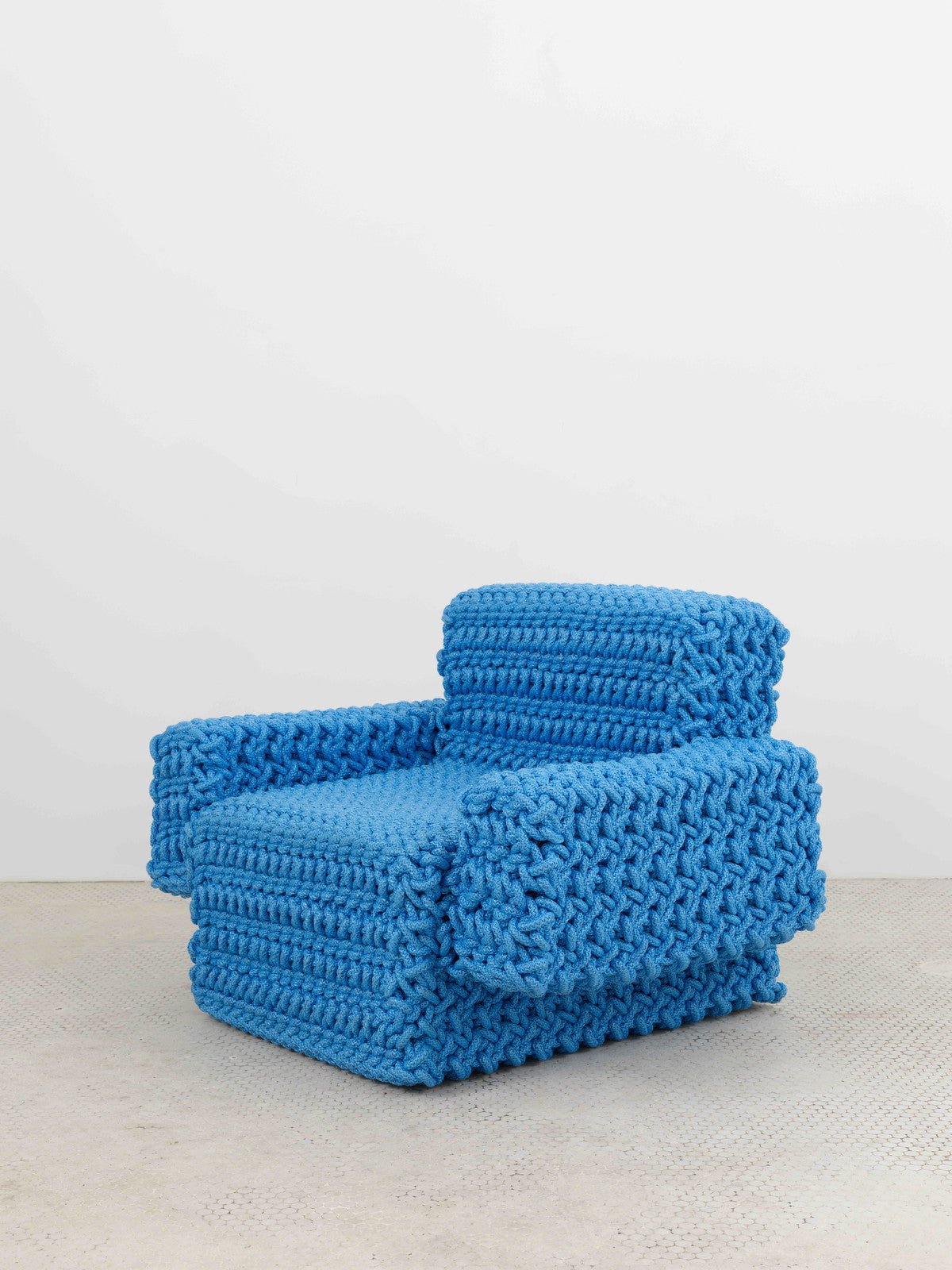
Based in South Korea, Kwangho Lee is highly acclaimed for his innovative use of materials and unique handcrafted approach to his work. Using familiar materials like wire, PVC, and nylon, he creates pieces that beautifully combine functionality and artistry. Growing up on a farm naturally led him to create pieces by hand, and he pursues the fusion of traditional methods and modern manufacturing techniques. His approach is experimental and intuitive, and he is constantly evolving his expression through collaborations and encounters with new materials.
Tell us about your background and how it has influenced your approach to art and design?
My grandparents were farmers and did a variety of farm work. They made and used their own tools, cooked with the crops they grew, and raised cows and chickens. I think that having experienced so much in that lifestyle made making something with my own hands a natural thing for me. The process of choosing materials, thinking about what to make, and putting my own emotions and thoughts into the piece doesn't seem to be much different in essence from what my grandparents did.

Your work seems to have elements inspired by traditional Korean crafts. What is your approach to creating these pieces?
To be honest, I have never mentioned traditional crafts in my work up until now. I have simply said that I want to create by facing the materials honestly. I have no intention of following tradition, and I believe that a dialogue with the materials is more important. The act of making something with my hands is what I find most interesting. Perhaps that is why my work sometimes appears to be artisanal and labor-intensive.


Your unique technique for weaving PVC and nylon is very unique, and it seems to be constantly evolving, including your works using metal. How has your approach to these materials changed over the years?
While I continue to use certain materials, I am always searching for a way that suits me. In other words, I am still in the process. I have been working with wire and rope crochet since 2016, and metal since 2018. These materials feel like a part of me, so I feel like I am growing together with them. I also think about how I and the materials will change in 30 or 40 years.


What is a typical day like in your studio? Also, how does the space you work in influence the work you create?
I arrive at the studio around 8:30 in the morning and leave around 6:00 in the evening. I spend time with my staff working on the day's projects, sketching new projects, and sometimes friends come over.
I have two studios in Seoul, each of different sizes. I create smaller works in the smaller space and larger works in the larger space. The size of my work naturally changes depending on the size of my studio space.
Also, when do you listen to music? What does music mean to you? Also, please tell us about your favorite music and songs.
Music has always been a part of my life. I don't have a particular genre that I'm particular about, but I enjoy listening to a variety of music while I work.
I also like listening to music while driving, and rather than choosing it myself, when my favorite song comes on the radio, I feel like I'm the main character in a movie.
I've loved watching movies since I was little, and I've also enjoyed listening to soundtracks. I listen to soundtracks before watching a movie, and then listen to them again afterwards. I enjoy listening to music that matches the scenes in the movie.
Of the films I've seen recently, I think the soundtrack to Wim Wenders' Perfect Days was particularly great.
You have worked with various brands and galleries, including Salon 94 Design, Hem, Tajimi Tiles, and Wekino. How do you approach these collaborations?
I enjoy collaboration in various forms. Through collaboration, I feel that my ideas are gradually solidified through the experiences and attempts I gain. My perspective broadens, my thinking becomes more profound, and I make more fond memories through new encounters.


Some of the work you've done so far has been large-scale installations, but how is your approach different when creating more intimate pieces like furniture or small objects?
I don't think my approach will change much. I feel that what I create expresses myself, and although my existence as a country remains the same, I believe that my work can change depending on the space in which it is placed. Whether it's small, big, spacious, tall, or even invisible, I try to make the most of each individual's unique characteristics.


Korean brand Wekino's latest creation, the Pirouette Shelf, has a unique sculptural presence. How did this project come about?
We have developed this product together with Wekino based on the shelves we created for a project with Phaidon Publishing in 2015. I think that a good process was born from the extensive communication we had with each other.
The original piece, "The Moment of Eclipse," was not created with the intention of functioning as furniture, but rather embodied the story of a solar and lunar eclipse. In that sense, I don't have a set purpose for each piece, and I think it's important to enjoy using them in a variety of ways through interaction with others. Through my work, I am always conscious of making my way of thinking and attitude more flexible.

